
Oral Appliances in Wenatchee, WA
An oral appliance is a custom-fitted dental device worn in the mouth to treat a specific condition. At Fibonacci Smile, Dr. Douglas Milner, DDS fabricates three categories of oral appliances: mandibular advancement devices for diagnosed sleep apnea, night guards for teeth grinding and clenching, and bite appliances for jaw joint disorders. Every appliance is custom-made from impressions or digital scans of your specific teeth. Stock or one-size-fits-all devices are not the same as a custom-fitted appliance and are not appropriate for treating the conditions covered here.
This page covers all three appliance types, how they work, who needs them, and what the process looks like at Fibonacci Smile. If you have already been diagnosed with sleep apnea and have a physician’s prescription for an oral appliance, or if you are dealing with teeth grinding or jaw pain, call (509) 665-0300 to schedule an appointment.
For a deeper look at sleep apnea specifically — including the sleep study process, OSA severity levels, and the full CPAP vs oral appliance comparison — visit the sleep apnea page.
Schedule Your Oral Appliance Consultation
The Three Types of Oral Appliances at Fibonacci Smile
| Appliance Type | Condition Treated | Prescription Required? | Insurance Billing |
|---|---|---|---|
| Mandibular Advancement Device (MAD) | Obstructive Sleep Apnea / chronic snoring | Yes — physician diagnosis and prescription required | Medical insurance (not dental) |
| Night Guard (Occlusal Splint) | Bruxism (teeth grinding and clenching) | No — within general dentistry scope | Dental insurance (partial coverage common) |
| Bite Appliance / Stabilisation Splint | TMJ disorder / jaw joint dysfunction | No — within general dentistry scope | Dental insurance (varies widely by plan) |
Oral Appliances for Sleep Apnea (Mandibular Advancement Devices)
A mandibular advancement device (MAD) is the most common oral appliance prescribed for obstructive sleep apnea. It fits over the upper and lower teeth and holds the lower jaw (mandible) in a slightly forward position during sleep. Moving the jaw forward also repositions the tongue forward, preventing both from collapsing back into the airway and causing obstruction.
The American Academy of Sleep Medicine and the American Academy of Dental Sleep Medicine jointly recommend MADs as a first-line treatment for mild to moderate OSA, and as an alternative for patients with severe OSA who cannot tolerate CPAP therapy. This is not marketing language. It is the current published clinical guideline.
Oral Appliances for Sleep Apnea (Mandibular Advancement Devices)
Two primary oral appliance types are used for sleep apnea: mandibular advancement devices and tongue-retaining devices. MADs are significantly more common and are the appliance type Dr. Milner fabricates for OSA patients at Fibonacci Smile.
| Factor | Mandibular Advancement Device (MAD) | Tongue-Retaining Device (TRD) |
|---|---|---|
| How it works | Holds the lower jaw forward, repositioning tongue away from the airway | Holds the tongue forward in a soft bulb, preventing it from obstructing the airway |
| Fit | Fits over upper and lower teeth; custom-made for your bite | Fits over the tongue tip; does not rely on teeth for retention |
| Best suited for | Most OSA patients with sufficient teeth; most common clinical choice | Patients with dentures or dental structures incompatible with a MAD |
| Adjustability | Two-piece MADs allow precise titration (jaw advancement adjustments) | Less adjustable than a two-piece MAD |
| Comfort | Most patients adapt within 2 to 4 weeks | Some patients find the tongue bulb takes longer to adapt to |
| Availability at Fibonacci Smile | Yes — primary OSA appliance fabricated by Dr. Milner | Available on a case-by-case basis; discuss at consultation |
One-Piece vs Two-Piece MADs
MADs come in one-piece designs (the upper and lower sections are joined) and two-piece designs (separate upper and lower sections connected by an adjustable mechanism). Two-piece MADs allow the lower jaw to be advanced in small increments over time, a process called titration. Research from SleepApnea.org and the AASM consistently shows that two-piece adjustable MADs tend to achieve better treatment outcomes and higher patient compliance than fixed one-piece devices, because the jaw position can be fine-tuned to the individual rather than fixed at a single advancement position.
Dr. Milner selects the appliance design appropriate for each patient’s anatomy and treatment goals. The choice between one-piece and two-piece designs, and the specific fabrication material, is discussed at your consultation.
The Titration Process
Getting the appliance fabricated is not the end of the process. The amount of jaw advancement needs to be calibrated to find the position that controls apnea events without causing jaw discomfort. This is called titration. It involves incremental adjustments at follow-up appointments over several weeks, guided by the patient’s symptom response and, ultimately, confirmed by a follow-up sleep study.
Patients who skip titration and use the appliance at its initial setting often achieve partial but not optimal results. Dr. Milner manages the titration process at Fibonacci Smile and coordinates with the prescribing physician on follow-up study scheduling.
Night Guards for Teeth Grinding and Clenching (Bruxism)
Bruxism is the habit of grinding or clenching the teeth, most commonly during sleep. It is common, often goes unnoticed by the person doing it, and causes progressive damage to teeth, jaw muscles, and the temporomandibular joint over time. A custom night guard does not stop the grinding behaviour itself, but it absorbs and redistributes the force, protecting the teeth and reducing the strain on the jaw muscles and joints.
Common signs that you may be grinding include: waking with a sore jaw or facial muscles, headaches that start at the temples, tooth sensitivity that is getting worse over time, wear facets visible on the biting surfaces of your teeth (often noticed at a dental checkup), and a partner who tells you they can hear you grinding at night.
Night Guard Material Types
Night guards are fabricated from different materials depending on the severity of grinding, the patient’s bite, and comfort preferences. Not all night guards are the same.
| Material Type | Best For | Key Characteristics |
|---|---|---|
| Hard acrylic (full coverage) | Moderate to severe grinding; patients with significant tooth wear | Most durable. Provides maximum protection and force absorption. Fabricated from rigid dental acrylic. Requires adjustment at delivery to ensure even bite contact. |
| Soft (EVA material) | Mild grinding; patients who struggle to tolerate hard appliances | More comfortable initially. Less durable than hard acrylic. Some patients find soft guards increase clenching force — not appropriate for severe bruxism. |
| Dual-laminate (hard outer / soft inner) | Moderate grinding; patients who want hard protection with softer contact against teeth | Combines durability of hard acrylic with cushioning against the tooth surface. Good middle-ground option for many patients. |
| Thin hard appliance (anterior only) | Specific bite interference cases; sometimes used for TMJ management | Covers only the front teeth. Causes posterior teeth to separate. Used for specific clinical indications — not a general bruxism guard. |
Dr. Milner selects the appropriate material at your consultation based on your grinding severity, bite, and any existing signs of tooth wear or jaw symptoms. He does not prescribe soft night guards for patients with severe bruxism because the compressibility of soft material can increase jaw muscle activity in some patients, making the problem worse rather than better.
Bruxism and Sleep Apnea
Research and clinical observation consistently show that bruxism and sleep apnea frequently co-occur. The micro-arousals that happen when the airway obstructs during an OSA event can trigger jaw clenching as part of the body’s arousal response. Patients who present with signs of both conditions need a treatment plan that addresses both, because a night guard alone will not control the OSA events, and an oral appliance for OSA may not fully address the grinding forces if bruxism is severe.
Dr. Milner evaluates both conditions at your consultation when relevant. In some patients, a properly fitted MAD reduces bruxism as a secondary benefit by managing the OSA that was driving it. In others, a separate night guard is appropriate alongside the OSA appliance. Read more about bruxism on the teeth grinding and bruxism page.
Bite Appliances for TMJ Disorder and Jaw Joint Dysfunction
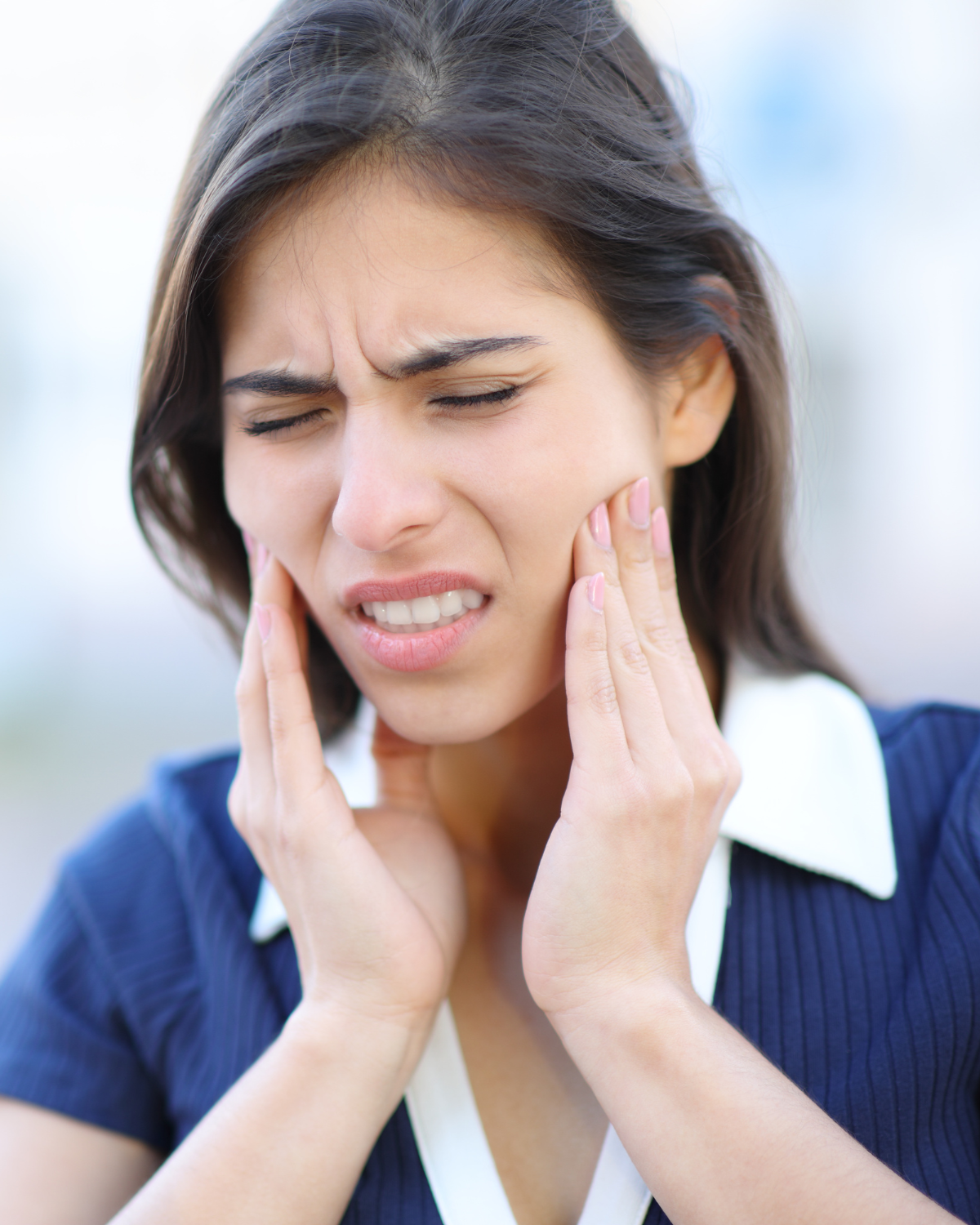
The temporomandibular joint (TMJ) connects the lower jaw to the skull on either side of the head. TMJ disorder refers to a range of conditions affecting this joint, the surrounding muscles, and the disc that cushions the joint surfaces. Symptoms include clicking or popping sounds when opening or closing the mouth, jaw pain or stiffness, difficulty opening the mouth fully, and headaches or ear pain.
Dental appliances play a role in TMJ management by altering the bite relationship and reducing the load on the joint. These are often called stabilisation splints or bite splints. They work by placing the jaw in a position that reduces pressure on the affected joint structures, allowing inflammation to settle and muscles to relax.
TMJ management is complex and multi-disciplinary. A bite appliance is often one component of treatment alongside physical therapy, anti-inflammatory measures, and behaviour modification. Dr. Milner assesses TMJ symptoms at your consultation and will tell you honestly whether an appliance is an appropriate part of your management plan or whether referral to a specialist is more appropriate for your situation.
Side Effects of Oral Appliances and How to Manage Them
Custom oral appliances are generally well-tolerated, but side effects are common during the adaptation period. Most are temporary and manageable. Knowing what to expect reduces the likelihood that patients abandon effective treatment during the adjustment phase.
For MADs (Sleep Apnea Appliances)
- Jaw soreness and muscle fatigue: most common in the first two to four weeks. Typically resolves as muscles adapt to the new jaw position. Morning jaw exercises help. If soreness persists beyond four to six weeks, Dr. Milner adjusts the advancement position.
- Increased saliva production: common in the first week. Resolves naturally.
- Dry mouth: some patients experience dryness, particularly mouth breathers. Using a lip seal device or tape and staying well hydrated helps.
- Temporary changes in bite: after removing the MAD in the morning, teeth may not come together normally for several minutes. This is temporary and resolves within 15 to 20 minutes for most patients. Persistent bite changes lasting longer than 30 minutes should be reported to Dr. Milner.
- Tooth movement (rare, long-term): extended use of some MAD designs over many years has been associated with minor tooth position changes in some patients. This is more common with fixed one-piece devices. Two-piece adjustable MADs and appropriate titration reduce this risk. Dr. Milner monitors for this at regular follow-ups.
For Night Guards (Bruxism)
- Initial discomfort: most patients adapt within one to two weeks. The appliance may feel bulky at first.
- Increased clenching with soft guards in some patients: if a soft night guard appears to be increasing jaw muscle activity or symptoms, Dr. Milner can refit with a hard acrylic design.
- Loosening over time: heavy grinders can wear through or distort the appliance material. Hard acrylic guards typically last three to five years with heavy use; some patients require replacement sooner.
What to Expect at Fibonacci Smile: The Appliance Process
Consultation and Assessment
Dr. Milner reviews your symptoms, relevant medical history, and any existing sleep study documentation (for OSA cases). He examines your teeth, bite, jaw range of motion, and gum health. For OSA appliances, he reviews the physician’s diagnosis and prescription. For bruxism, he looks for signs of wear, cracking, and muscle tenderness. The appliance type, material, and design are selected at this appointment.
Impressions or Digital Scans
Custom appliances require a precise record of your teeth. Fibonacci Smile uses digital scanning where possible, providing a more accurate and comfortable record than traditional impression trays. The records are sent to a dental laboratory specialising in the relevant appliance type.
Delivery and Fitting Appointment
The finished appliance is delivered and checked for fit, comfort, and function. For night guards and bite appliances, Dr. Milner adjusts the bite contacts to ensure even distribution across the appliance surface. For MADs, the initial jaw advancement position is set and the titration schedule is discussed.
Follow-Up and Titration (MADs)
MAD patients return for titration appointments over several weeks, gradually advancing the jaw position until symptoms are controlled. A follow-up sleep study, coordinated with the prescribing physician, confirms that the appliance is adequately treating the apnea events. Dr. Milner manages this entire process at Fibonacci Smile.
Long-Term Maintenance
All appliances require regular cleaning and periodic professional review. Dr. Milner checks the appliance at your regular dental visits, looks for signs of wear, and monitors for any side effects. Replacement timelines vary by material and use: hard acrylic night guards typically last three to five years; MADs may need replacement after five to seven years depending on material and wear.
Cost and Insurance Coverage for Oral Appliances in Wenatchee
| Appliance Type | Typical Cost Range | Insurance Billing | Notes |
|---|---|---|---|
| MAD for sleep apnea | $1,500 to $3,500 before insurance | Medical insurance (not dental) — requires physician prescription and diagnosis | Medicare covers with appropriate documentation. Most commercial medical plans cover with diagnosis and prescription. |
| Custom night guard (bruxism) | $400 to $800 | Dental insurance — typically covers 50% of major restorative or appliance benefit, subject to annual maximum | Coverage varies significantly by plan. Some plans classify night guards under appliance benefits; others under restorative. |
| TMJ bite appliance (stabilisation splint) | $500 to $1,000 | Dental and/or medical insurance — coverage varies widely; some plans exclude TMJ treatment entirely | Check your specific plan. Some medical plans cover TMJ appliances if prescribed for pain management. |
The most important distinction is that OSA appliances are billed to medical insurance, not dental insurance. Most patients are surprised by this. The reason is that OSA is a medical condition requiring a physician’s prescription, and medical insurers carry the treatment cost. Fibonacci Smile coordinates this billing process. For night guards and TMJ appliances, dental insurance applies, subject to your plan’s appliance or major restorative benefit.
CareCredit financing is available at Fibonacci Smile for any out-of-pocket balance. Patients paying in full by cash or check receive a 5 percent discount. The Fibonacci Smile Subscription Club provides in-house membership benefits for patients without dental insurance. Full details are on the insurance and financing page.
Frequently Asked Questions About Oral Appliances in Wenatchee
What is the difference between an oral appliance for sleep apnea and a night guard?
They are designed for different purposes and work differently. A mandibular advancement device for sleep apnea holds the lower jaw forward to keep the airway open during sleep. A night guard for bruxism creates a protective barrier between the upper and lower teeth to absorb grinding force. A standard night guard does not advance the jaw and does not treat sleep apnea. An OSA appliance is not designed to protect teeth from grinding force the way a hard acrylic night guard is. Using a night guard instead of a properly fitted MAD for sleep apnea will not control apnea events.
Do I need a sleep study before getting an oral appliance for sleep apnea?
Yes. A physician diagnosis from a formal sleep study is required before Fibonacci Smile can fabricate an oral appliance for OSA. This is both a medical requirement and an insurance requirement. If you suspect sleep apnea, begin with your primary care physician for a referral to a sleep study. Once you have a diagnosis and prescription, contact us. Visit the sleep apnea page for the full process.
Are over-the-counter boil-and-bite appliances effective for sleep apnea?
Over-the-counter MADs (boil-and-bite devices) can advance the jaw, but they are not custom-fitted to your teeth or bite, and they cannot be precisely titrated. Research consistently shows that custom-fitted two-piece adjustable MADs achieve better treatment outcomes and higher patient compliance than stock devices. For diagnosed sleep apnea, a custom appliance fabricated by a trained dentist and titrated to your optimal jaw position is the appropriate clinical standard. OTC devices may also create bite problems over time if not properly fitted.
How long does it take to get used to an oral appliance?
Most patients adapt to a custom night guard within one to two weeks. MAD adaptation typically takes two to four weeks, during which jaw soreness and increased saliva production are common and expected. The titration process for MADs extends over several weeks as the jaw position is adjusted. Patients who persevere through the adaptation period consistently report significant improvement in sleep quality and daytime energy. Those who give up within the first week often miss the point at which adaptation occurs.
Can I use my night guard to treat sleep apnea?
No. A standard bruxism night guard is not designed to advance the lower jaw and cannot maintain an open airway the way a mandibular advancement device does. Using a night guard as a sleep apnea treatment will not adequately control apnea events. If you have both bruxism and sleep apnea, Dr. Milner evaluates both at your consultation and designs a plan that addresses each condition appropriately.
How long does a custom oral appliance last?
Hard acrylic night guards typically last three to five years with nightly use, depending on grinding severity. Heavy grinders may need replacement sooner. MADs typically last five to seven years before materials fatigue or the fit changes with dental changes. Dr. Milner assesses your appliance at regular visits and advises when replacement is appropriate. Do not continue using a cracked or significantly worn appliance.
Is an oral appliance covered by insurance?
It depends on the appliance type. MADs for diagnosed sleep apnea are billed to medical insurance, not dental insurance. Most commercial medical plans and Medicare cover them with appropriate physician documentation. Night guards and TMJ appliances are billed to dental insurance, with coverage varying widely by plan. Fibonacci Smile verifies your specific coverage before treatment begins and handles all billing. Confirm with your insurer which benefits apply before your appointment.
What if my appliance causes jaw pain or my bite feels different in the morning?
Temporary morning jaw soreness and brief bite changes when you first remove the appliance are normal during the MAD adaptation period. If jaw soreness persists beyond four to six weeks or is severe, contact Dr. Milner for a titration adjustment. If your bite does not return to normal within 30 minutes of removing the appliance, contact Dr. Milner promptly. This is a sign that the jaw advancement may be set too aggressively for your anatomy and needs adjustment.
Talk to Dr. Milner About the Right Appliance for Your Situation
Whether you have a physician’s prescription for a sleep apnea oral appliance, you wake up with a sore jaw and suspect you are grinding your teeth, or you are dealing with TMJ symptoms that have not resolved on their own, Fibonacci Smile can evaluate your situation and fabricate the right appliance for your specific needs.
Dr. Milner has been in private practice in the Wenatchee Valley since 1994. He evaluates patients for all three appliance categories and coordinates with your physician when sleep apnea is involved. Every appliance is custom-made at Fibonacci Smile. Nothing stock, nothing off the shelf.
Call (509) 665-0300 or email info@fibonaccismile.com. Our hours rotate weekly, so call ahead or check the contact page for the current schedule. We serve patients from across the Wenatchee Valley including East Wenatchee, Cashmere, Leavenworth, and Chelan.