
Teeth Whitening in Wenatchee, WA
Professional teeth whitening is one of the most common cosmetic dentistry requests Dr. Douglas Milner, DDS sees at Fibonacci Smile. It is also one of the most misunderstood. Patients often come in expecting a result that whitening cannot deliver, or they have tried over-the-counter products and been disappointed by how little changed. This page gives you an honest picture of what professional whitening can achieve, who it works best for, what it cannot do, and what it costs in the Wenatchee area.
Dr. Milner holds Accreditation from the American Academy of Cosmetic Dentistry, which means shade selection and cosmetic outcomes are not afterthoughts at Fibonacci Smile. If whitening is right for your situation, you leave with a result that was planned. If another approach, such as veneers or bonding, would serve you better, Dr. Milner will tell you that before any treatment begins.
Fibonacci Smile offers both in-office whitening and custom professional take-home tray systems. Call (509) 665-0300 to schedule a whitening consultation.
Schedule Your Whitening Consultation
Why Professional Whitening Produces Different Results Than OTC Products
What Type of Staining Do You Have?
Not all tooth discolouration responds to whitening the same way. Understanding what type of staining you have is the starting point for choosing the right approach.
Extrinsic Staining
Extrinsic stains sit on the outer surface of the enamel. They are caused by pigmented food and drinks (coffee, tea, red wine, berries), tobacco use, and inadequate brushing over time. These stains respond well to professional whitening. In-office whitening is particularly effective for extrinsic staining because the higher-concentration gel penetrates and breaks up the stain molecules on and within the enamel surface.
Intrinsic Staining
Intrinsic stains originate inside the tooth, within the dentin layer. Common causes include:
Tetracycline antibiotic use during tooth development — causes grey or brown banding within the dentin
Fluorosis — excessive fluoride during development causes white spots or brown discolouration
Trauma — a knocked tooth may darken over time due to internal bleeding or pulp changes
Ageing — as enamel thins with age, the naturally darker dentin beneath shows through more
Intrinsic staining is more difficult to treat with whitening. Some cases respond to extended or repeated professional whitening, particularly mild tetracycline staining and age-related darkening. Severe intrinsic staining is often better addressed with porcelain veneers, which cover the discolouration rather than attempting to bleach through it. Dr. Milner assesses the type and severity of your staining at your consultation and recommends the approach most likely to achieve your goals.
Whitening Options at Fibonacci Smile
In-Office Professional Whitening
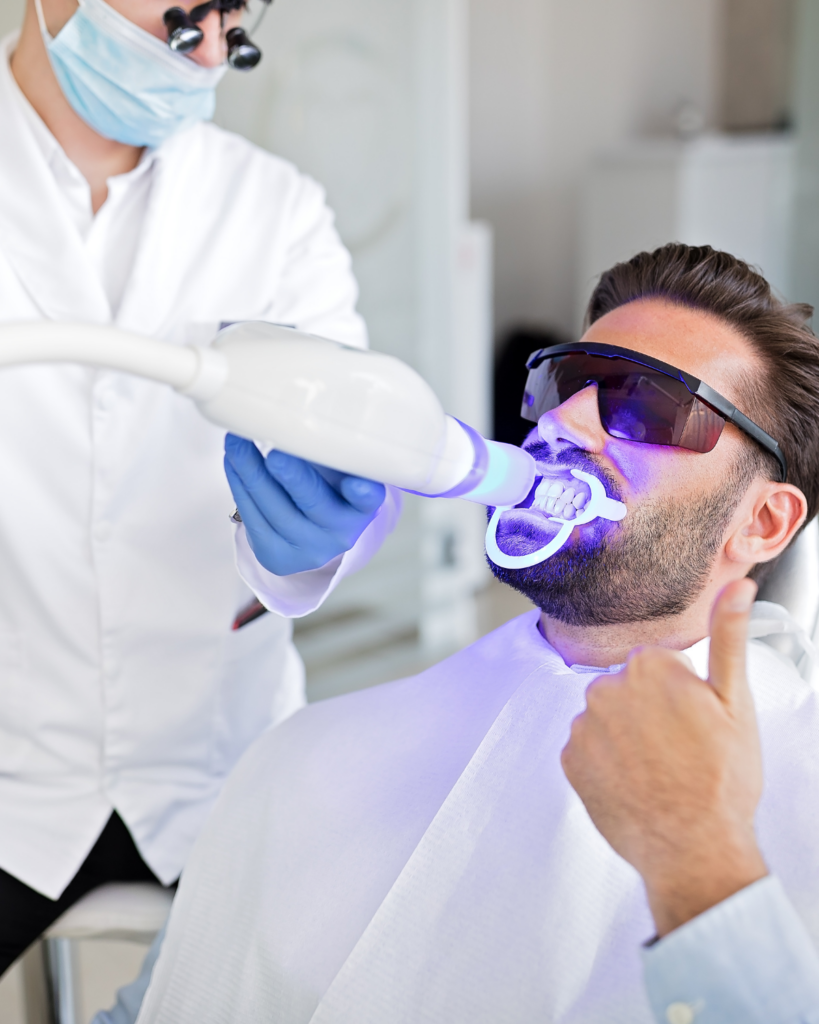
In-office whitening is performed at Fibonacci Smile during a single appointment that typically takes 60 to 90 minutes. Dr. Milner or the hygiene team applies protective barriers to your gum tissue, then applies a professional-strength bleaching gel to the teeth. Depending on the system used, a special light may be used to activate the gel and accelerate the whitening process. Multiple gel applications during the same appointment maximise results.
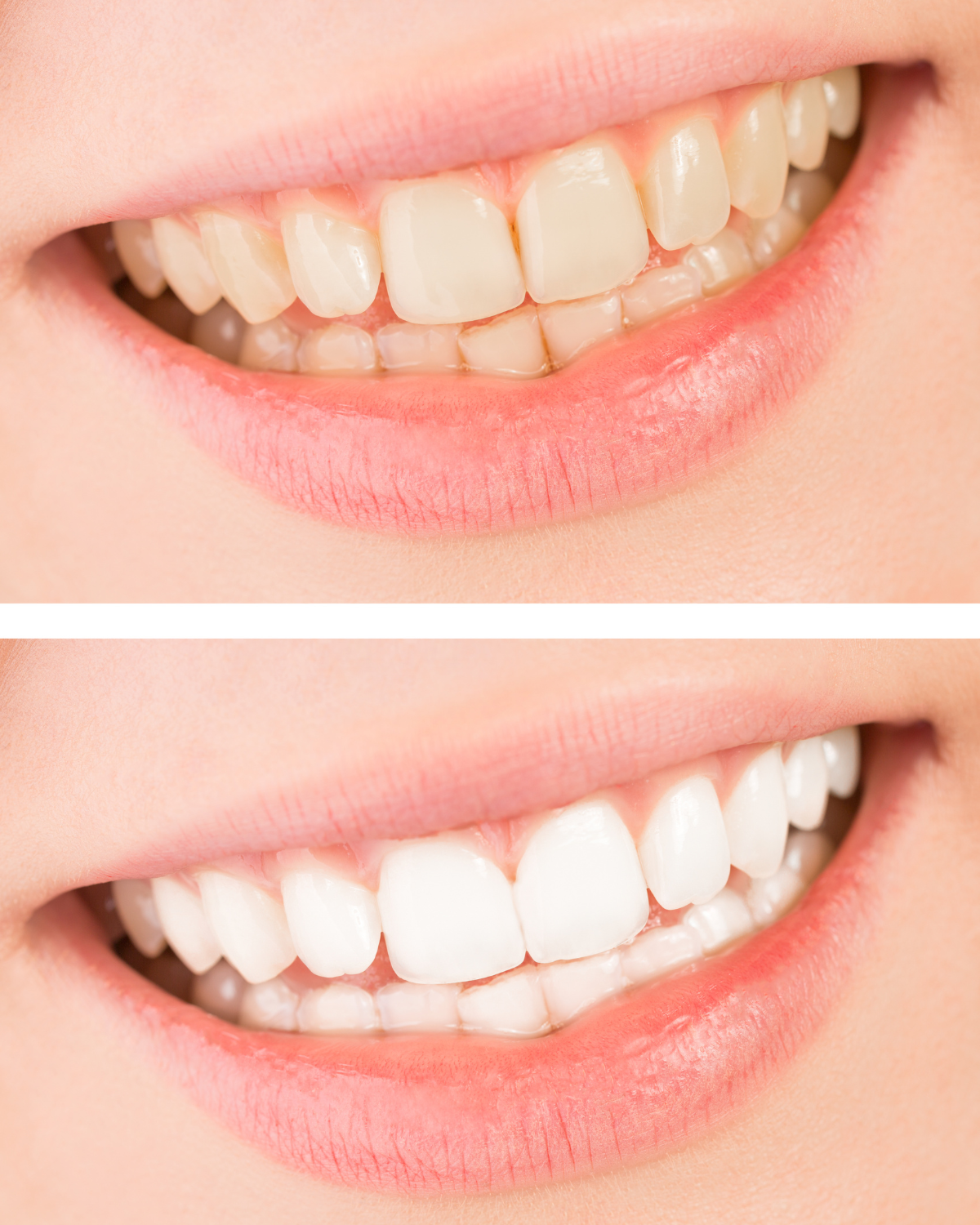
Most patients see 3 to 8 shades of improvement in a single in-office session. Results are immediate. You leave the appointment with visibly whiter teeth. In-office whitening is the right choice when you want fast results, have an event approaching, or want the maximum change in a single visit.
Professional Take-Home Tray Whitening
Fibonacci Smile fabricates custom whitening trays from impressions of your teeth. The trays are delivered with professional-grade carbamide or hydrogen peroxide gel in a concentration your dentist selects based on your sensitivity level and whitening goals. You wear the trays for the prescribed time each day, typically 30 to 60 minutes, over two to three weeks.
Take-home tray whitening produces results comparable to in-office whitening when used consistently, though the change happens more gradually. The trays are reusable and can be used for maintenance or touch-ups for years, provided you return for gel refills. For patients who prefer to whiten at their own pace or who have sensitivity concerns, the take-home system is often the better fit.
| Factor | In-Office Whitening | Professional Take-Home Trays | OTC Products (Strips/Kits) |
|---|---|---|---|
| Peroxide concentration | 25% to 40% hydrogen peroxide | 10% to 22% carbamide peroxide (professional grade) | 3% to 10% hydrogen peroxide (OTC limit) |
| Tray fit | N/A — gel applied chairside | Custom-fitted to your exact teeth | Universal fit — variable contact |
| Results visible | Same appointment | Gradually over 2 to 3 weeks | Gradually over 2 to 4 weeks (modest) |
| Shade improvement (typical) | 3 to 8 shades in 1 visit | 4 to 8 shades over treatment course | 1 to 2 shades with consistent use |
| Session time | 60 to 90 minutes in-office | 30 to 60 minutes per day at home | 15 to 60 minutes per day at home |
| Supervised by dentist | Yes — full supervision throughout | Yes — prescription and follow-up from Dr. Milner | No supervision |
| Gum protection | Protective barrier applied by dentist | Custom tray prevents gel migration to gum tissue | Variable — may irritate gums with ill-fitting strips |
| Cost (WA State estimate) | $350 to $700 per session | $250 to $500 for kit and trays | $20 to $100 for strips/kits |
| Longevity of results | 1 to 3 years with good habits | 1 to 2 years; trays reusable for touch-ups | Weeks to months; results fade faster |
| Best suited for | Fast results, events, significant staining | Gradual whitening, sensitive teeth, budget-friendly professional option | Mild staining, maintenance only |
Will Whitening Work for Your Situation?
Whitening Works Well for
Healthy, natural teeth with extrinsic staining from food, drink, or tobacco
Age-related yellowing where enamel has thinned and dentin shows through
Mild tetracycline staining (mild cases may respond to extended whitening)
Patients who want to brighten before getting new restorations placed at the new shade
Patients completing Invisalign who want to finish treatment with whiter teeth
Whitening Has Limitations for
Severe intrinsic staining from tetracycline, fluorosis, or trauma — whitening may not achieve satisfactory results; veneers are often more effective
Grey or blue-toned staining — these shades are more resistant to peroxide bleaching than yellow or brown tones
Patients with significant tooth sensitivity — sensitivity increases during whitening; the take-home system at a lower concentration is often more manageable than in-office for sensitive patients
Patients with active decay or gum disease — these need to be treated before whitening begins
Critical Disclosure: Whitening Does Not Change Restorations
Whitening as Part of a Broader Cosmetic Plan
Whitening Before Veneers or Bonding
When a patient is planning veneers or composite bonding alongside whitening, the standard sequence is to whiten first. The veneer or bonding shade is then matched to the whitened teeth. This ensures the final result, combining the whitened natural teeth with the new restorations, is consistent. Reversing this sequence, whitening after placing restorations, creates a mismatch. Dr. Milner sequences cosmetic treatment plans this way as standard practice. Read more about our porcelain veneers.
Whitening After Invisalign
Many patients who complete Invisalign want to whiten after treatment is finished, once their retainers are in place. The aligned teeth are easier to whiten evenly, and the Invisalign retainer trays can sometimes be used for home whitening gel. Dr. Milner discusses this at the completion of your Invisalign treatment. Read more on the Invisalign page.
Whitening with the AACD Standard for Shade Selection
Dr. Milner’s AACD Accreditation means his approach to shade selection goes beyond picking the lightest option available. The goal at Fibonacci Smile is a whitened shade that looks natural in the context of your face, your age, and your skin tone. Teeth that are disproportionately white relative to the whites of the eyes or the skin tone can look artificial. Dr. Milner discusses the target shade at your consultation so the result matches your goals and looks natural.
Managing Whitening Sensitivity
Tooth sensitivity during and after whitening is the most common side effect. It occurs because the whitening gel temporarily increases the permeability of enamel, allowing temperature changes and stimuli to reach the nerve more easily. Sensitivity is typically mild to moderate and resolves within one to three days after the whitening session or treatment course ends.
At Fibonacci Smile, Dr. Milner reviews your sensitivity history before recommending a whitening approach. Patients with existing sensitivity or thin enamel are generally better candidates for the take-home tray system at a lower concentration, which allows the teeth to adjust more gradually. Desensitising agents can be applied before or after in-office whitening to reduce discomfort. Potassium nitrate toothpaste used in the days leading up to and following whitening also helps manage sensitivity.
- Before treatment: Use a sensitivity toothpaste (potassium nitrate) for one to two weeks
- During treatment: Avoid very hot or cold food and drink on whitening days
- After treatment: Continue sensitivity toothpaste for several days; sensitivity typically resolves within 48 to 72 hours
- If sensitivity is severe or persists beyond three days, contact Fibonacci Smile
How Much Does Teeth Whitening Cost in Wenatchee, WA?
| Option | WA State Cost Range | Insurance | Notes |
|---|---|---|---|
| In-office professional whitening | $350 to $700 per session | Not covered — cosmetic procedure | Single session, 60-90 minutes. Most dramatic and fastest result. |
| Professional take-home trays (kit + trays) | $250 to $500 | Not covered | Reusable trays for future touch-ups with gel refills. |
| OTC strips/kits (for comparison) | $20 to $100 | Not covered | Modest results. Suitable for light staining or maintenance only. |
How Long Does Whitening Last?
Professional whitening results last one to three years for most patients, depending heavily on lifestyle habits. The teeth are always slowly re-staining from food, drink, and environmental factors. How quickly results fade depends on:
- Coffee, tea, and red wine consumption — the most common drivers of re-staining
- Tobacco use — accelerates staining significantly
- Oral hygiene — consistent brushing reduces surface staining accumulation
- Whether you use touch-up treatments — patients with custom take-home trays can use gel refills for periodic maintenance at a fraction of the original cost
Dr. Milner recommends a touch-up approach for long-term maintenance. Patients who had initial whitening at Fibonacci Smile can return for gel refills for their custom trays, keeping their result current with minimal time and cost compared to starting a new whitening course from scratch.
Frequently Asked Questions About Teeth Whitening in Wenatchee
How many shades whiter can I expect to get?
Will whitening hurt?
Can I whiten if I have crowns or veneers?
Whitening will not change the shade of your crowns, veneers, or composite fillings. If you have existing restorations on visible front teeth, whitening your natural teeth may create a visible shade difference between the whitened enamel and the unchanged restorations. Dr. Milner discusses this at your consultation and advises on whether whitening is appropriate and what, if any, restoration updates would be needed afterward.
How long do results last?
Is professional whitening safe for my enamel?
Are whitening toothpastes or strips worth using?
Should I whiten before or after getting veneers or other cosmetic work?
Does whitening work on grey or blue-toned staining?
Schedule Your Whitening Consultation in Wenatchee
Call (509) 665-0300 or email info@fibonaccismile.com. We are at 1 Fifth Street, Suite 100 in downtown Wenatchee. Our hours rotate weekly, so call ahead or check the contact page for the current schedule. We serve patients from across the Wenatchee Valley including East Wenatchee, Cashmere, Leavenworth, and Chelan.